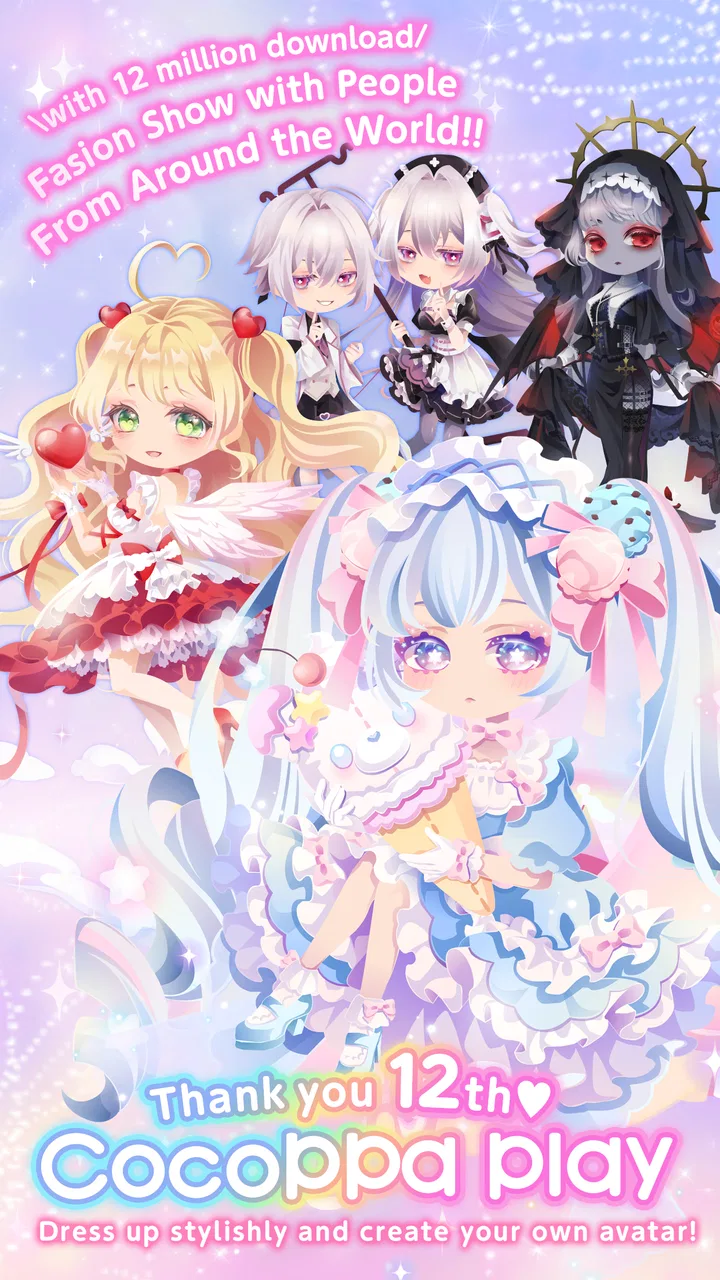
CocoPPa Play Star Girl Fashion
- 3.9
- Rating
- 5.00M
- Installs
- Free
- Price

 Analysis by App-foxy
I went into CocoPPa Play Star Girl Fashion expecting a light dress-up game, and that is exactly where its appeal begins. You create looks, adjust the visual details, and decide whether the final outfit feels worth keeping. The game is free to start, belongs to the casual category, and has been around long enough to build a sizeable audience: it has passed five million installs, with an average rating of 3.9 from roughly 143 thousand ratings. Those numbers suggest a familiar experience rather than a niche experiment, but they do not tell you whether its particular rhythm will suit you. After spending time with it, I see it as a relaxing fashion playground that works best when you enjoy small creative decisions more than fast competition.
The developer is ユナイテッドマーケティングテクノロジーズ, and the game is aimed at Teen players. It was released on August 23, 2014, and the current version is 2.67, so this is not a brand-new fashion app trying to discover its identity. Its long life is visible in the way the experience focuses on collecting, styling, and returning for another attempt. I would recommend it to someone who likes avatar customization and wants a low-pressure activity for short breaks, while I would steer away anyone looking for a deep story, demanding strategy, or a purely offline creative tool.
How the dress-up loop feels in practice
I find it useful to treat each styling session as a small design exercise rather than a hunt for a perfect outfit: decide what you want the character to express, then make changes that support that idea. That keeps the open-ended format from feeling aimless and makes it easier to know when a look is finished. It also gives me a clearer basis for judging what the game’s long-running, current form offers.
You May Also Like

 Blood Strike: 2.5 Anniversary
Blood Strike’s Loadouts Turn Every Drop Into a Tactical Gamble
A close look at Blood Strike’s custom loadouts: how fast access to signature weapons reshapes its battle royale rhythm, rewards preparation, and narrows the gap between fights.

 Pandora - Music & Podcasts
Pandora’s Music Is Easy to Start, but Harder to Recover
Pandora’s strength is its low-effort path from a seed to a station. Its weak spot is how much confidence it asks you to place in connection, setup, and quiet recovery.

 8 Ball Pool
 Is Built on Rivalries, Rematches, and Routine
A close look at the rivalries, rematches, shared routines, and unanswered safety questions that turn a quick pool match into a persistent mobile community.

 Samsung Music
’s Quiet Strength Is Playing What You Already Own
Its reach comes less from spectacle than from dependable access to a personal library. That simplicity is both the app’s strongest retention engine and its ceiling.

 AccuWeather: Weather Radar
AccuWeather Review: A Quick, Clear Forecast for Everyday Decisions
For everyday plans, the best forecast is the one you can understand quickly. AccuWeather makes rain timing, radar, and local conditions easy to act on, with a few trade-offs.

 Hill Climb Racing
Why Hill Climb Racing Still Turns Crashes Into One More Run
A tiny car, a bumpy hill and one more upgrade: Hill Climb Racing keeps resurfacing because its simple chaos makes every near-miss feel personal.
More From Our News Desk
View All News


The first action is choosing a style direction
The most important decision happens before the outfit is complete. I usually begin with a simple idea instead of opening every option at random: a soft everyday look, something dramatic for a special occasion, or a deliberately mismatched experiment. That small intention makes the customization process feel more like styling and less like tapping through a wardrobe. The game’s central pleasure comes from seeing separate fashion choices become a recognizable character rather than from completing a complicated objective.
This is also where the game is more approachable than many dress-up alternatives. You do not need to understand a large rule system before making your first look. A new player can start by changing visible elements and learning through comparison. If one item overwhelms the rest of the outfit, another choice quickly shows the difference. I found that forgiving structure useful because it encourages trying combinations without treating the first result as a permanent commitment.
My practical advice is to build around one anchor item. It might be a striking top, a distinctive hairstyle, or an accessory that sets the mood. Once that choice is in place, I add quieter pieces around it. This avoids a common beginner problem: selecting several attention-grabbing items and ending up with an outfit that has no clear focus. The game becomes much more satisfying when each tap has a visual reason behind it.
The interface is best approached as a browsing exercise rather than a race. I pause after a few changes and look at the whole character, because an item that seems attractive by itself may not work with the current silhouette or color balance. That habit also reduces the feeling of endless scrolling. Instead of asking whether every available item is good, I ask whether it supports the look I am making.
Feedback creates the reason to keep adjusting
The feedback rhythm is simple: I make a fashion decision, inspect the result, and decide whether the character feels closer to the idea in my head. That response is immediate enough to keep the process engaging. There is no need to wait for a long match or understand a complicated battle outcome before knowing whether a change helped. The reward is partly visual, because a better combination is visible as soon as it is made.
That rhythm works particularly well during short sessions. If I have only a few minutes, I can still make a meaningful change to a character and stop when the outfit feels finished. On a longer session, the same structure supports experimentation: I can keep one strong element and rebuild everything around it, then compare the new direction with the old one. The game does not force me to treat every attempt as a major project, which is one reason it feels comfortable as a casual title.
There is a trade-off, though. Players who need explicit goals may find the feedback too soft. A dress-up game can show that an outfit looks different without proving that it is better, and personal taste does most of the judging here. I enjoyed that freedom, but I can also see why someone might lose interest if they want clear missions, measurable mastery, or a competitive ladder to explain what to do next.
I also noticed that the most enjoyable feedback comes from editing rather than collecting alone. New clothing can be exciting, but an item only becomes valuable when it changes a look I already have in mind. This is a useful way to avoid turning the experience into simple inventory browsing. Before chasing another piece, I ask what kind of outfit it would actually improve.
Rewards are most useful when they support a plan
The reward side of the loop is tied to the pleasure of expanding creative possibilities. A new fashion choice gives me another direction to test, but the reward is not automatically meaningful just because it is new. The strongest moments come when an addition solves a styling problem: a look needs balance, a color needs a counterpoint, or a plain outfit needs one memorable detail.
Because the game includes in-app purchases ranging from $0.99 to $99.99 per item, I would approach the collection element carefully. Free access makes it easy to try the basic experience before spending anything, and I would strongly suggest doing that. The sensible question is not whether a purchase is attractive in isolation, but whether it completes a look I genuinely want to keep building. That mindset helps prevent a fashion game from turning every moment of inspiration into an impulse purchase.
I find a personal cataloging method helpful. When I discover a combination I like, I remember its central theme rather than trying to memorize every individual piece. For example, I might keep track of a bright, playful direction or a more restrained evening style. This gives future rewards a purpose: I can judge whether they fit an existing theme or open a genuinely different one. It is a small change in approach, but it makes collecting feel more intentional.
The game is less suitable for anyone who wants all creative possibilities available immediately. The free entry point is welcoming, yet the presence of purchasable items means the full wardrobe experience can feel less straightforward than a one-time paid dress-up game. I would not treat the purchase range as a reason to reject the game automatically, but I would set a spending limit before browsing deeply. That is especially important for younger players, since the Teen rating does not make purchase decisions for them.
Resetting a session keeps experimentation comfortable
The reset in this loop is not a dramatic restart. It is the moment when I look at a finished or nearly finished outfit and decide to begin another variation. That gentle reset is central to the game’s appeal. I do not have to protect a winning run or worry that an unsuccessful combination has ruined progress. I can try something stranger, return to a previous direction, or simply make a small improvement.
That freedom makes the game useful in everyday situations. If I am waiting for an appointment, I can create one look and stop. If I am unwinding at home, I can spend longer comparing styles. The same basic activity scales to the time available because the reset does not demand a formal end-of-level routine. Another session begins because I have noticed a new possibility, not because the game has forced me into a difficult challenge.
One workflow I recommend is to change only one visual category at a time during a revision. If the outfit feels wrong, I first try a different hairstyle or clothing piece, then inspect the result before altering accessories. This makes the feedback easier to understand. Changing everything at once may produce a better result, but it teaches me nothing about why the original combination failed. For a game built around visual choices, that small pause turns casual tapping into a more thoughtful creative process.
The downside is that a player who wants a strong sense of completion may find the reset too open-ended. There is always another possible combination, but not every new combination feels like progress. I sometimes reach a point where I am changing items simply because I can. When that happens, the best choice is to stop with a look I like rather than assuming the next session must improve it.
Who will enjoy this more than the usual alternatives?
Compared with a straightforward avatar editor, this game offers a stronger reason to return because the styling process is framed as an ongoing casual activity rather than a single customization screen. Compared with competitive fashion games, it feels less dependent on pressure and more dependent on personal taste. That makes it a better choice for players who want to relax and experiment, but a weaker choice for those who need rankings, precise objectives, or a story that carries the experience forward.
It also occupies a different space from a conventional mobile puzzle game. There is no satisfaction from solving a fixed board or optimizing a numerical score in the same way. The challenge is subjective: can I make the character look coherent, expressive, or distinctive? Players who enjoy visual design may find that surprisingly absorbing. Players who prefer clear right answers may see the same freedom as a lack of direction.
I would especially recommend it to someone who likes fashion games but becomes tired of timed rounds. The ability to inspect a look and refine it at my own pace is a genuine strength. It is also friendly to people who enjoy sharing creative ideas with friends informally, even if they are not trying to become expert stylists. On the other hand, anyone searching for realistic clothing simulation, detailed character storytelling, or a serious design tool should choose something more specialized.
Small habits that make the game better
First, decide on the mood before opening the wardrobe. This prevents the session from becoming an exhausting search through unrelated options. Second, use one standout piece as the starting point and keep the surrounding choices quieter. Third, when a look feels close but not right, revise a single category instead of replacing the entire outfit. These three habits make the action-feedback cycle clearer and help each session produce a result rather than a pile of unfinished experiments.
I would also separate browsing from spending. I can enjoy discovering possible combinations without immediately deciding that every appealing item belongs in my collection. If a purchase still seems useful after I have a specific outfit in mind, it is easier to judge its value. If I cannot explain what the item adds, I leave it alone. That approach is particularly sensible in a free game with optional purchases that can reach a substantial amount per item.
Another useful approach is to treat the first outfit as a sketch. I do not expect it to be perfect, and I do not discard it mentally if it looks ordinary. Instead, I identify one successful detail and use that as the starting point for the next attempt. This creates a natural reset: each session carries forward an idea without requiring the player to preserve every decision.
My verdict on the complete loop
The core loop is easy to understand and pleasant to repeat: choose a fashion direction, see the character change, enjoy the result, and begin again when another idea appears. Its best quality is the immediate visual feedback, which gives even a short session a clear purpose. I never need to wait for a complicated outcome to know whether a styling choice has improved the look.
Its limitations are equally clear. The open-ended structure will not satisfy everyone, and the collection side requires self-control because optional purchases sit alongside the free experience. The Teen rating is worth keeping in mind for families, not because the game feels especially intense, but because the audience and purchase context deserve adult awareness. I also would not choose it over a deeper fashion simulator or a competitive dress-up game if those are the main reasons you play.
Still, for a casual player who enjoys creating characters and making small visual decisions, the game has a comfortable identity. The long-running release history, current version 2.67, and large install base show that its basic idea has lasting appeal, while the 3.9 average indicates that it is enjoyable without being universally loved. My final recommendation is simple: try the free version, form a specific styling idea, and judge the experience by how much you enjoy refining it rather than by how quickly you collect new items. This is at its best when the outfit itself is the reward and another session begins because you have one more idea to test.
FAQs for CocoPPa Play Star Girl Fashion
01What is CocoPPa Play Star Girl Fashion?
CocoPPa Play Star Girl Fashion is a mobile dress-up and social avatar game focused on creating a personalized star character. You can customize your avatar’s appearance, collect fashionable outfits and accessories, decorate spaces, and interact with other players. The game combines fashion styling, collection elements, and social features, making it suitable for users who enjoy creative customization rather than action-based gameplay.
02Is CocoPPa Play Star Girl Fashion free to download and play?
The game is generally free to download, allowing players to begin creating an avatar and exploring its main features without paying upfront. However, it may include optional in-app purchases for premium currency, clothing, accessories, special items, or faster progress. Some content can also be obtained through regular play, but users should review purchase settings and store policies before spending money.
03Does the game require an internet connection?
CocoPPa Play Star Girl Fashion is primarily an online experience because several of its features depend on communication with the game’s servers. Avatar data, events, item collections, and social interactions may require an active internet connection. Offline access may be limited or unavailable, so players should expect to use Wi-Fi or mobile data for reliable gameplay and keep the application updated.
04Can players interact with other users in CocoPPa Play Star Girl Fashion?
Social interaction is an important part of the game, with features that may allow players to view avatars, share fashion styles, visit spaces, or participate in community activities. Because user-generated content and communication can change over time, parents should check the available privacy and safety settings. Avoid sharing personal information, and use blocking or reporting tools if an interaction feels inappropriate.
05Is CocoPPa Play Star Girl Fashion suitable for children?
The game may appeal to children and younger players because of its colorful visuals, character customization, and fashion-focused gameplay. Nevertheless, it can contain advertising, in-app purchases, online social functions, and content that varies by region or account settings. Parents should check the age rating, enable purchase restrictions, review privacy options, and supervise online interactions before allowing regular use.
Pros
- Huge wardrobe with cute
- colorful outfits and accessories.
- Avatar customization offers plenty of ways to create a unique look.
- Social features let you view and interact with other players’ styles.
- Regular events provide new themes
- rewards
- and fashion challenges.
- Easy controls make the game accessible for casual players.
Cons
- Many attractive items require premium currency or real-money purchases.
- Progress can feel slow without frequent play or spending.
- The large number of menus may feel confusing at first.
- Online features require a stable internet connection.
- Some content may be repetitive after extended play.

CocoPPa Play Star Girl Fashion
Gallery